
airflow plausibility gives a workshop a specific observation to record before deciding whether an original ECU file is a suitable Stage 1 candidate. Record the vehicle identity, complaint, ambient conditions, service context and relevant fault memory, because a requested increase in output cannot be separated from the system that has to deliver it.
Baseline evidence for airflow plausibility
A repeatable airflow plausibility check compares like with like: warm engine state, similar road load and the same diagnostic channels where the ECU exposes them. This helps distinguish a one-off impression from a trend that changes with heat, fuel quality, altitude or component condition. The original read should remain archived and untouched while this evidence is gathered.
Calibration decision context
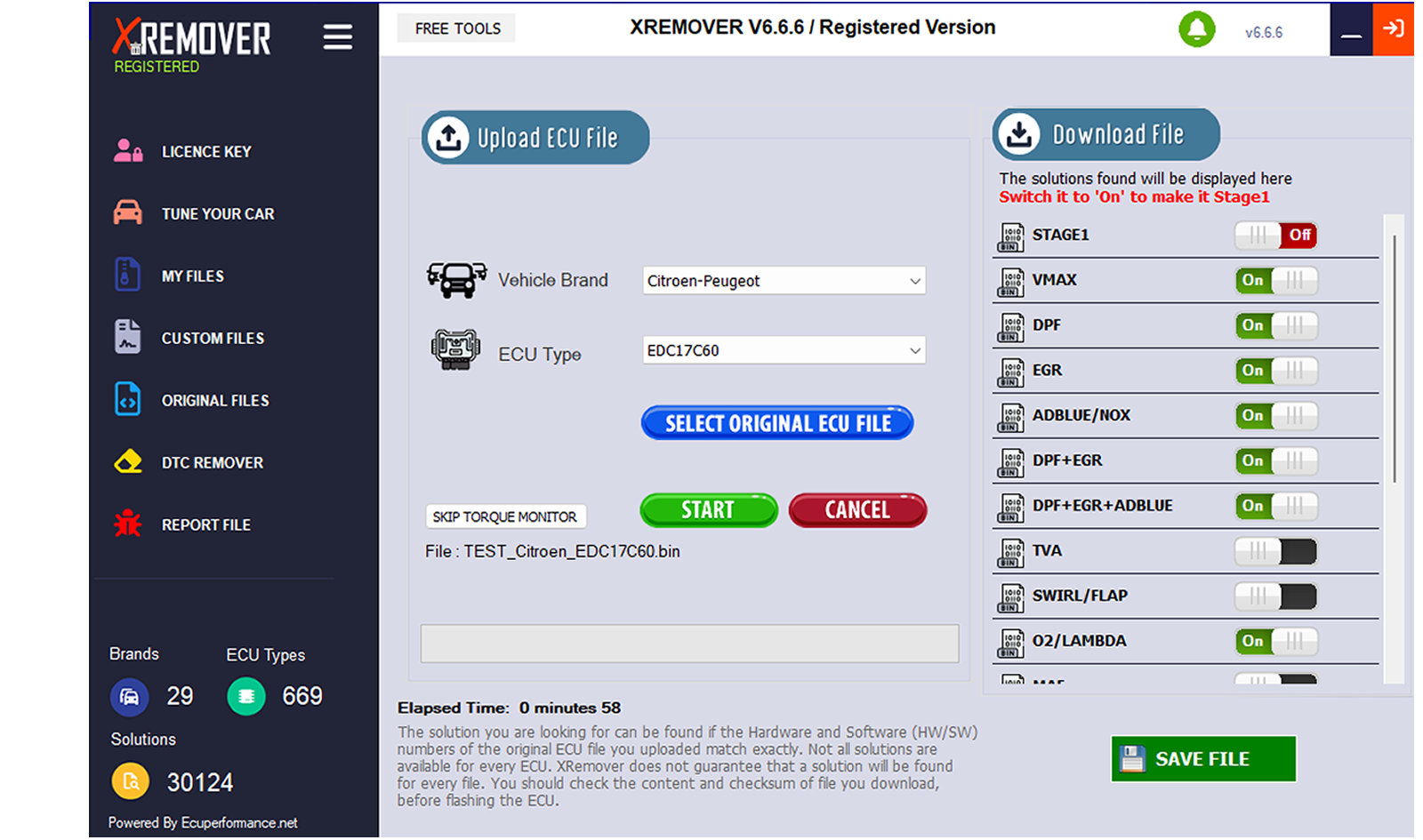
During an XRemover workflow, correct vehicle and ECU selection comes before the original-file upload. The technician can then judge the available Stage 1 result against the airflow plausibility record instead of treating a file as a substitute for diagnosis. If the baseline is unstable, repair and validation belong ahead of any performance decision.
Validation after programming
Post-flash validation revisits airflow plausibility after the car is fully warm. Scan for new faults, compare requested and actual behaviour, and include normal part-throttle use as well as a controlled loaded pull. The result should remain lawful for local road and emissions rules, and the customer record should explain what was checked and what needs future maintenance.
Workshop handover
The practical value of airflow plausibility is traceability: measured observations, a preserved original file, a documented decision and a verification route for the next visit. It keeps workshop communication factual without promising an outcome that the exact vehicle has not demonstrated.
Use manufacturer procedures, appropriate diagnostic equipment and local compliance requirements throughout a airflow plausibility assessment. A clean file process supports good service only when the underlying vehicle condition remains part of the decision.
How to read airflow plausibility in context
The useful question about airflow plausibility is not whether one number looks ideal at idle. Read it alongside engine speed, requested load, actual load, coolant and intake temperature, fuel condition, road gradient and the time spent at the same demand. A workshop record should state whether the observation was made cold, warm, climbing, cruising or accelerating, because those differences change the diagnosis. Repeating the same short check on another day is often more valuable than treating one isolated data point as proof.
For airflow plausibility, technicians should also separate a control response from a root cause. The ECU may reduce torque, change boost request, enrich or limit fuel in response to another signal. Checking wiring, hoses, sensors, fluid condition, service history and stored fault context avoids asking a calibration to compensate for hardware that has not been repaired. This is a practical diagnostic discipline, not an argument against a well-planned Stage 1 result.
Decision boundaries for airflow plausibility
If airflow plausibility is consistent and the rest of the vehicle evidence agrees, it can support a controlled calibration plan. If it is intermittent, noisy or outside the expected pattern, the right next step is diagnosis and a documented re-test. Preserve the original ECU read, retain before-and-after scans, and note any limits selected for the customer’s actual use. This makes later support clear when the vehicle returns with a different symptom or a changed service condition.
Road use, emissions requirements and manufacturer service procedures remain relevant throughout. The workshop should never present an unverified peak figure as a substitute for the measured state of the car. A careful airflow plausibility review contributes to a result that is smoother, more repeatable and easier to explain, whether the final decision is to proceed, reduce the target or defer calibration until the vehicle is healthy.
Service record for airflow plausibility
Keep the airflow plausibility observation with mileage, date, diagnostic identifiers, test conditions and any corrective work performed. When a result is later reviewed, this record shows whether the vehicle changed or whether the same behavior was present before the file was processed. It also helps the workshop give the owner practical advice about inspection intervals, fuel, cooling, driving conditions and symptoms that require a return visit. Clear records are the most reliable way to keep a technical decision explainable.
airflow plausibility should be reviewed carefully before release.